
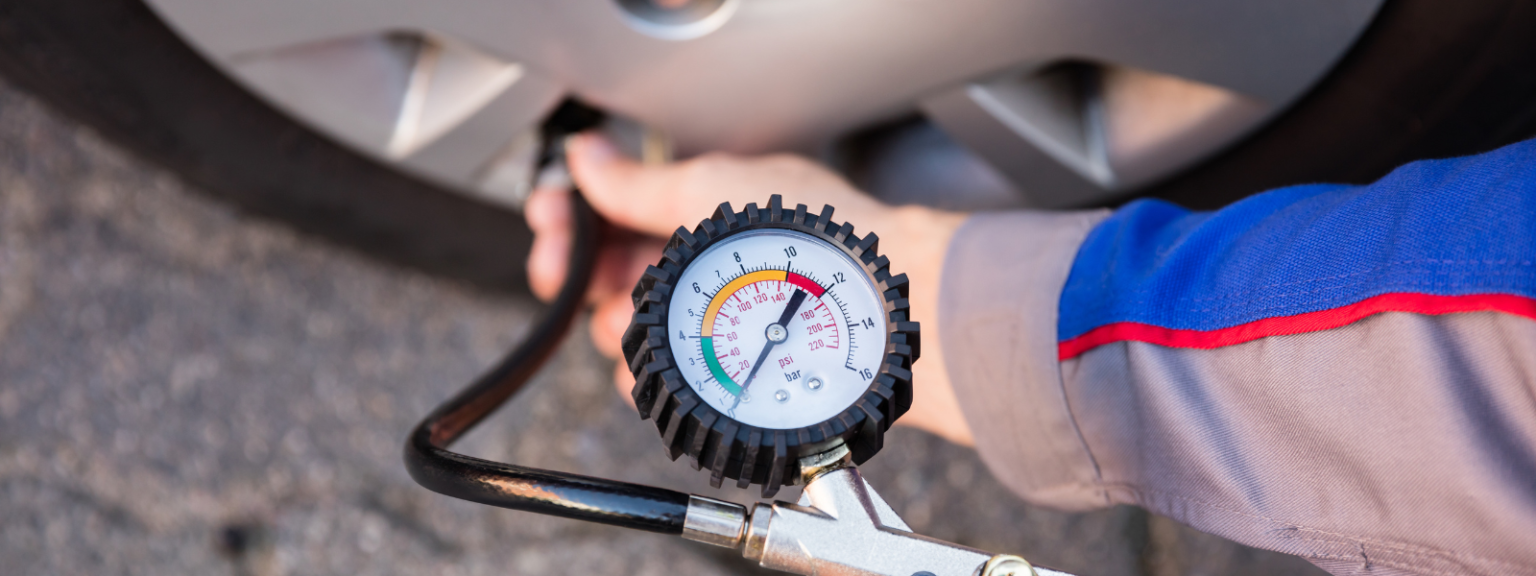
Significant changes in altitude affects tyre pressures when traveling from one elevation to another. Fortunately, this influence is relatively small and can be easily accommodated.
As altitude increases, atmospheric pressure decreases.
| Altitude (ft.) | Air Pressure (psi) |
|---|---|
| Sea Level | 14.7 |
| 1,000 | 14.2 |
| 2,000 | 13.7 |
| 3,000 | 13.2 |
| 4,000 | 12.7 |
| 5,000 | 12.2 |
| 6,000 | 11.7 |
| 7,000 | 11.3 |
| 8,000 | 10.9 |
| 9,000 | 10.5 |
| 10,000 | 10.1 |
When it comes to measuring tyre inflation pressure, it is important to realize there is a difference between atmospheric pressure and gauge pressure. Most pressure gauges (including all tyre pressure gauges) are designed to measure the amount of pressure above the ambient atmospheric pressure.
Depending on the length of their stay at different altitudes, drivers may want to set their cold tyre pressures the morning after arriving at their destination, as well as reset them the morning after they return home.

Comments are closed, but trackbacks and pingbacks are open.